

Fixing the food system – a surplus of food for thought
Sustainable Foods 2026 promised to be the place where global leaders shape the future of food systems. A bold ambition given that achieving real change will take long-term collaboration, rather than a quick fix. But it was great to see many of the food industry’s most influential figures and brands gathered to dive into the future of food, health and sustainability.
Across a packed agenda, politicians and CEOs appeared alongside established brands and emerging start-ups. They spoke on topics as diverse as health and nutrition, food security, net zero, consumer behaviour, food waste and regenerative agriculture. These sessions sparked good conversations and it was encouraging to note consistency of messaging from those with very different roles to play. So much ground was covered that I’ll only be touching on a few of the key topics raised in this blog. But keep your eyes open for future blogs delving into other issues in more detail.
The food system is still failing
Our overarching takeaway was the stark reminder of the fact that we still (as in everyone in our society) have a big problem. Food is fundamental for life and health, yet the food system is failing. We are an increasingly unhealthy nation. We heard about one third of children leaving primary school with obesity and of teenagers’ constant exposure to unhealthy food. And that, with some of the highest obesity rates in Europe, diet-related health issues cost the UK an estimated £74 billion a year in terms of pressures on the NHS, lost productivity and reduced tax income. Radical change is needed to address these issues and fix what is broken.
Who’s responsible?
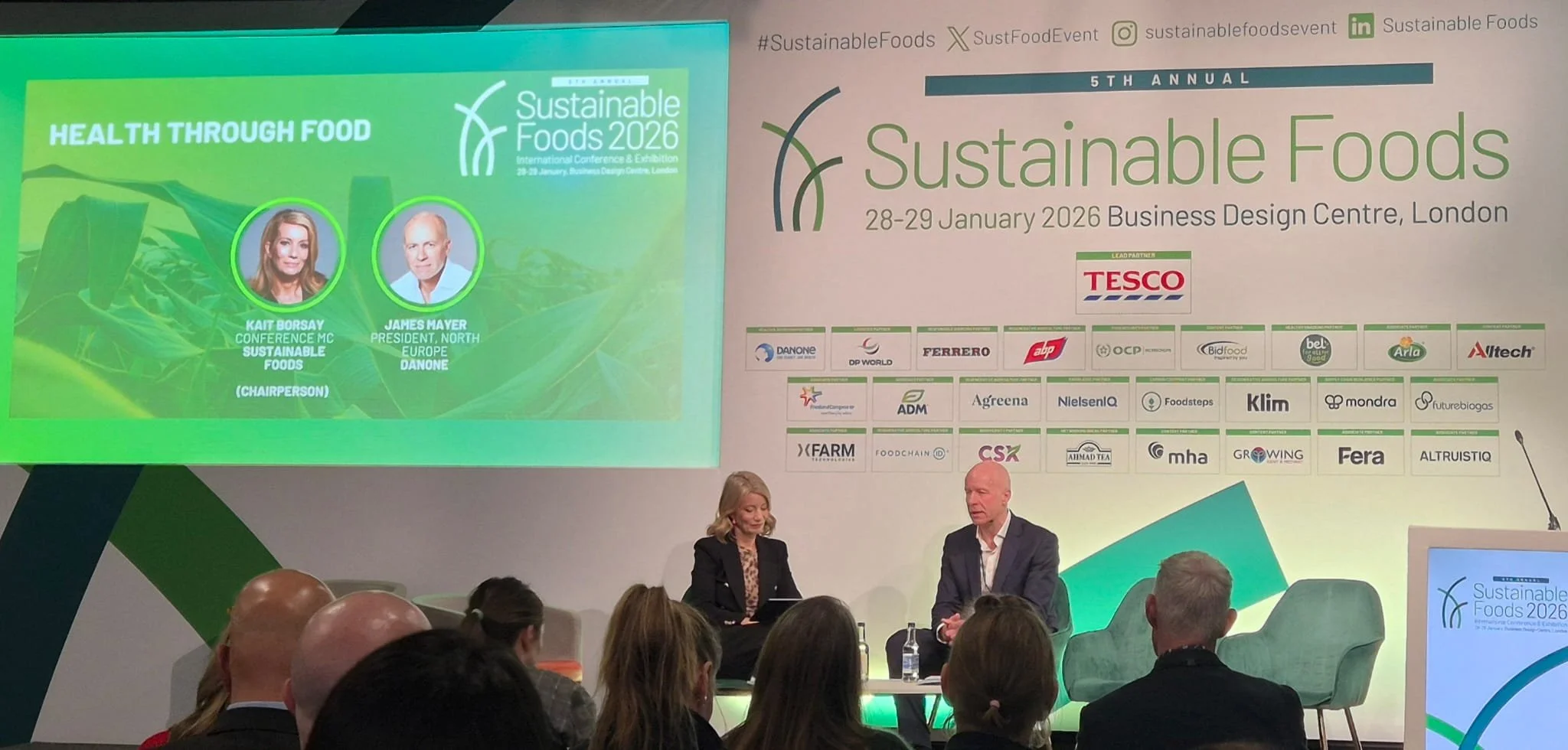
As might be expected, a recurring question was – who is actually responsible for fixing this? It is clear no single group can transform the food system alone: we need industry, government and citizens to act. But this lack of ownership and accountability means we are getting nowhere fast. Solutions exist, and great stuff is happening but in siloes. Action to roll these solutions out more widely is fragmented and applied inconsistently. For progress to be made, we need for all the players in the food system to focus on the 70% of issues everyone agrees on. The strongest call to action over the two days was to stop waiting for permission, focus on what we all agree on and act together – now.
New technologies can offer solutions
But let’s not forget about the many amazing pilots and pockets of success that we also got to hear about. Innovators are using new technologies, including AI, in exciting ways, such as to support healthy consumer choices and to work alongside nature to improve crop yields and nutritional profiles.
Tackling food waste, a critical element of a sustainable food system, was one area where the potential of AI is huge. It can be an effective tool to improve stock management and dynamic pricing in store, to reduce waste across the supply chain and create personalised shopping lists to help shoppers reduce waste at home. But all of this requires mandatory reporting, high quality, consistent data, and far better data-sharing across industry. New technologies don’t work in a vacuum, there needs to be a joined-up approach to make these tools work.
The forces reshaping the food system
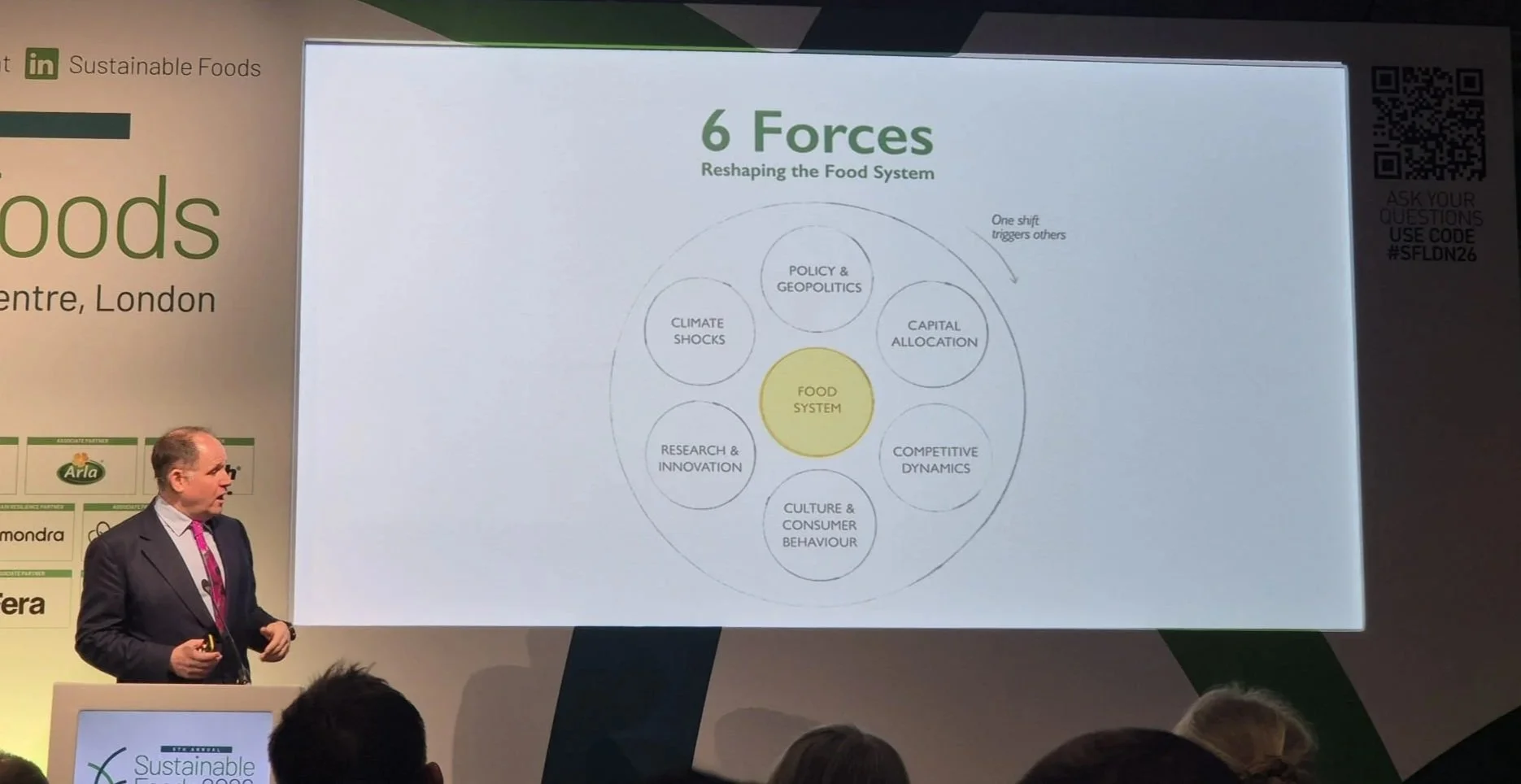
Speakers, including food campaigner and Leon co-founder Henry Dimbleby, also talked about the disruptors: the forces reshaping the food system as we know it, which affect how food is grown, produced, sold and consumed. Two of these forces are accelerating to the point where they cannot be ignored. The first is climate change and the second is GLP-1 drugs. The meteoric rise of the use of GLP-1s for weight loss is having a big impact on type (demand for nutrient-dense options) and volume (smaller portions) of food consumed and on convenience retail. And as obesity declines, questions were posed on whether other health concerns, such as gut health, immune systems and mental health, will become of greater relevance to the food system?
Sustainability matters – a rallying cry
The final big picture takeaway was around sustainability. We heard that the food industry is stuck in a commercial loop where short-term economics often conflict with long-term health and sustainability. For this to change, we need to find ways to align sustainability with commercial reality so it reaches and becomes a priority in the boardroom. Sustainability cannot sit in a silo – if it does not drive value, it will not scale.
However, as a business supporting others to put impact on people and planet at the very heart of their brand, it was heartening to hear a rallying cry on why sustainability matters from the event’s lead sponsor, Tesco. Ken Murphy spoke about consumer demand for healthy, nutritious food grown sustainably, pointing out that crucially these options need to taste good and remain affordable too. While arguing that sustainability should be a cornerstone of business, he acknowledged the challenges around lack of funding and poor environmental data hold the industry back. Again we heard the message loud and clear, that areas of disagreement cannot be allowed to block progress and a collective focus on innovation and tangible action is necessary to push sustainability to the forefront. We left with no doubt that change is possible. But that it can only happen with a collective will to transform the food system. That’s why bringing many of the key players in food together, to challenge and learn from each other, at an event like this is so vital, and inspiring.